
Author: Site Editor Publish Time: 2025-12-20 Origin: Site
Magnets are everywhere in modern technology. From the speakers in your laptop to the latch on your tablet cover, we rely on them daily. But when it comes to our smartphones, there is often a lingering worry. Does placing a strong magnet directly on the back of a delicate electronic device cause damage?
This question has become even more relevant with the rise of magnetic mounting systems and MagSafe accessories. Consumers love the convenience of snapping a phone onto a car mount or a wireless charger, but they worry about the long-term effects on battery life, screen functionality, and internal sensors.
In this guide, we will break down the science behind magnets and smartphones. We will explore how modern devices are built to withstand magnetic fields, identify which components might actually be at risk, and help you decide if a magnetic phone case is the right choice for you.
To understand if magnetic cases are harmful, we first need to understand what's inside your phone. Modern smartphones are packed with sophisticated technology, including solid-state drives (flash memory), LCD or OLED screens, and lithium-ion batteries.
In the past, older electronics like CRT monitors and hard disk drives (HDDs) were highly susceptible to magnetic interference. A strong magnet could distort the colors on an old television screen or wipe data from a spinning hard drive. However, the technology in your pocket today is fundamentally different.
Your phone uses flash memory (NAND) to store photos, apps, and the operating system. Unlike old-school hard drives that used magnetic platters to store data, flash memory is entirely electronic. It uses electrical charges to store bits of information, not magnetic fields. Therefore, a magnet from a standard phone case will have zero effect on your stored data. Your photos and contacts remain safe.
Similarly, modern screens (LED, LCD, and OLED) function differently from the old cathode ray tubes found in bulky TVs. They are not controlled by magnetic fields, so a magnet near the display won't cause the "rainbow effect" or distortion that you might remember from 90s technology.
While the memory and screen are safe, there is one component that relies heavily on magnetism: the digital compass.
Your smartphone determines its orientation and direction using a magnetometer—a tiny sensor that detects the Earth's magnetic field. This allows your maps app to show which way you are facing.
When you introduce a strong magnet near this sensor (like a magnetic plate in a phone case), it can temporarily disrupt the reading. The phone might think "North" is actually the direction of your case's magnet.
Generally, no. Most modern smartphones are smart enough to detect this interference. If you remove the magnetic case, the compass usually recalibrates itself and returns to normal function. However, if you rely heavily on highly accurate compass readings for hiking or geocaching, you might find a magnetic case inconvenient while actively navigating.
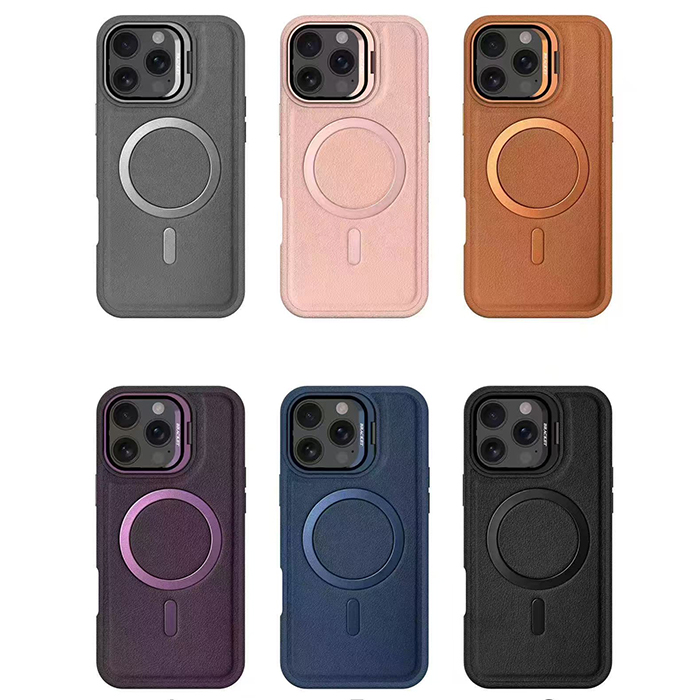
A common myth is that magnetic accessories drain battery life. The reality is more nuanced. The magnet itself does not pull energy from the battery. A static magnetic field has no mechanism to "drain" chemical energy from a lithium-ion cell.
However, interference with the phone's signal could indirectly affect battery life. If a poorly designed case (especially one with thick metal components alongside the magnets) blocks the antenna, your phone has to work harder to maintain a cellular or Wi-Fi connection. This extra effort requires more power, which can lead to faster battery drain. This is usually a fault of the case materials blocking the signal, rather than the magnet itself.
Apple's introduction of MagSafe revolutionized the phone case market. By embedding a ring of magnets directly into the iPhone 12 and subsequent models, Apple confirmed that magnets—when properly implemented—are safe for their devices.
In fact, magnetic alignment often improves the health of your device during charging. Wireless charging relies on induction coils. If the coils in the phone and the charger aren't perfectly aligned, energy is lost as heat. Heat is the enemy of battery longevity. Magnetic cases and chargers ensure perfect alignment every time, reducing heat generation and charging the device more efficiently.
When choosing a phone case, it's helpful to weigh the pros and cons of magnetic options against traditional styles.
Feature | Standard Silicone/TPU Case | Magnetic/MagSafe Case | Wallet Folio (with Magnet Clasp) |
Protection | High | High | Medium/High |
Convenience | Low (no mounting) | High (snap-on mounting) | High (storage included) |
Compass Interference | None | Low/Temporary | Low/Temporary |
Wireless Charging | Works (if thin) | Optimized alignment | Often blocked by thickness |
Credit Card Safety | Safe | Safe | Risk of demagnetizing cards |
This is a valid concern for those who use wallet cases. Credit cards traditionally store data on a magnetic stripe. A strong enough magnet can scramble this data, rendering the stripe useless.
Most modern magnetic phone cases use magnets that are too weak to damage a credit card instantly, but prolonged exposure could cause issues over time. However, the world has largely moved to EMV chips (the small square chip on the front of your card), which are not affected by magnets. If you still rely on the magnetic stripe for swiping, keep your cards in a shielded pocket or away from direct contact with strong magnets.
Not all magnetic cases are created equal. Cheaply manufactured accessories might use low-quality magnets that are too strong (interfering with sensors) or too weak (risking your phone falling off a mount).
When shopping for a magnetic phone case, consider these factors:
1. Manufacturer Reputation: Look for brands that specialize in phone accessories. Companies like BATEN have been specializing in the technical design and manufacturing of phone accessories since 2015, ensuring that the products are tested for safety and compatibility.
2. MagSafe Certification: If you have an iPhone, "Made for MagSafe" or "MagSafe Compatible" labels usually indicate that the magnet strength is calibrated to Apple's standards.
3. Shielding: High-quality wallet cases often include shielding materials to protect your credit cards from the magnetic clasp.
For the vast majority of users, magnetic cases are completely safe. They will not erase your memory, ruin your screen, or kill your battery. The convenience of magnetic mounts and efficient wireless charging far outweighs the minor, temporary interference with the compass app.
The technology inside our mobile devices has evolved to be robust and resilient. As long as you purchase high-quality accessories from reputable suppliers who understand the technical specifications of modern devices, you can snap that case on with confidence.


